










The Formalist Portal
     
Welcome to The Formalist PortalSaturday, July 04 2009 @ 07:10 AM CDT
View Printable Version

THREE POEMS by Russell Bittner

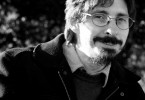
Rusell Bittner

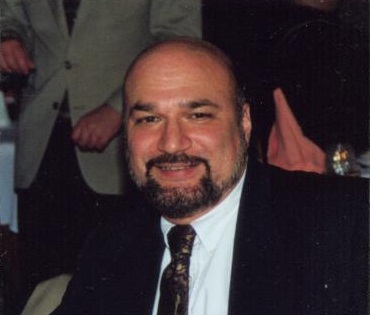
Russell Bittner lives, writes and works out of his home in Brooklyn, New York.  His prose, poetry and photography have been widely published both in print and on the ‘Net. 


View Printable Version

ROY CAMPBELL: BOMBAST AND FIRE by Joseph Pearce

ROY CAMPBELL: BOMBAST AND FIRE

by Joseph Pearce


Roy Campbell was considered by many of his peers, most notably by T.S. Eliot, Dylan Thomas, and Edith Sitwell, as one of the finest poets of the 20th century. Why then, one wonders, is he not as well-known today as many lesser poets? The answer lies in his robust defense of unfashionable causes, both religious and political, but also, and more regrettably, in his unfortunate predilection for making powerful enemies. Seldom has a life been more fiery, more controversial, and more full of friendship and enmity than that of this most mercurial of men.

Born in South Africa in 1901, Campbell learned to speak Zulu almost as soon as he had learned to speak English. "The Zulus are a highly intellectual people," Campbell recorded in the first volume of his autobiography. "They have a very beautiful language, a little on the bombastic side and highly adorned. Its effect on me can be seen in The Flaming Terrapin . . . They take an enormous delight in conversation, analyzing with the greatest subtlety and brilliance."

It seems that Campbell's own conversation conveyed more than a hint of this Zulu influence. Following his arrival at Oxford in 1919, his contemporaries were both bemused and beguiled by his tales, "a little on the bombastic side and highly adorned," of the African bush. He soon earned himself the nickname "Zulu," and his reputation as a wild colonial boy was immortalized by his friend, Percy Wyndham Lewis, who modeled the character of Zulu Blades in his novel, The Apes of God, on Campbell's image at Oxford.

The African influence also came to the fore in the long, vibrant, and colorful poem that established Campbell's reputation. The Flaming Terrapin, published in 1924, was, according to one critic, "like a breath of new youth, like a love affair to a lady in her fifties."

"Among a crowd of poets writing delicate verses he moves like a mastodon with shaggy sides pushing through a herd of lightfoot antelopes," wrote George Russell in the Irish Statesman. "No poet I have read for many years excites me to more speculation about his future, for I do not know of any new poet who has such a savage splendour of epithet or who can marry the wild word so fittingly to the wild thought."

View Printable Version

REAR-MEAT RHODA by Joseph S. Salemi

 REAR-MEAT RHODA

Girls come in assorted sizes,
Predictable, and sans surprises.
But there’s one who breaks the quota:
The guys all call her Rear-Meat Rhoda.

Rhoda has a rounded bottom
(Not too many females got ’em).
Men who pass say “Get a loada
That caboose!” when they see Rhoda.

Rhoda’s buns show perfect motion,
Undulating like the ocean.
Just as men love Scotch and soda
They love that butt on Rear-Meat Rhoda.

View Printable Version

A VERY CONTEMPORARY ARTIST SPEAKS by Sally Cook

 A VERY CONTEMPORARY ARTIST SPEAKS

Permit me to describe the way in which I work. I will be brief, but only in the way that the mountains and the oceans are brief.

To begin, the term “artist” holds no real meaning for me. The diversity of my commitment to the contemporary demands that I trash all antique concepts. I hate old works; I hate new works. I hate authorities, families, patriotic symbols, religion, historical reference, figurative art and formal poetry—any symbols of the old order.

I am bored by technique; who isn’t? My work has no message because there is no message, other than what you may assign to it. That makes me feel good, and feeling is all. I am here to rub your noses in the stink of my feelings.

The viewer has no rights in the world of art—this world belongs to such as me and has for some time. Get over yourselves, you who still believe that ideas, beauty and form have relevance. You are nothing but what I call “Beauticians.”

View Printable Version

SIX POEMS by R0y Scheele

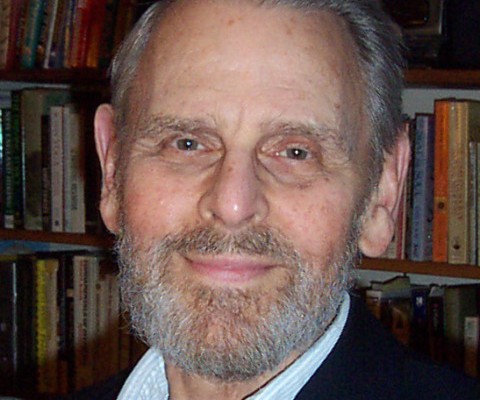
Ray ScheeleRoy Scheele is Poet in Residence at Doane College in Crete, Nebraska. His poems have appeared widely, in such journals as Poetry, The Southern Review, and Verse, as well as a wide variety of other print and online magazines, and his work has been frequently anthologized. A book-length collection of his poems, A Far Allegiance, is forthcoming from Backwaters Press.


View Printable Version

FIVE POEMS by Leo Yankevich

Leo YankevichLeo YankevichLeo Yankevich lives with his wife and three sons in Gliwice, Poland.   His poems and translations from German, Polish and Russian have appeared in over a hundred journals since the 1980s.  His latest book, Tikkun Olam & Other Poems, is available in pdf format from the New Formalist Press.


View Printable Version

FIVE POEMS by Alfred Dorn

Alfred DornAlfred Dorn began writing poetry at age ten after reading James Russell Lowell’s “Aladdin.” A prolific, widely published writer of metrical verse, he is the author of Voices From Rooms,and From Cells To Mindspace, both published in 1997 by Somers Rocks Press; and Claire And Christmas Village, issued by Pivot Press in 2002. He is the coordinator of the World Order of Narrative and Formalist Poets Contest, which offers large cash awards for the best metrical entries. Dr. Dorn’s interests include art history, philosophy, travel, antiques, and psychic research.


View Printable Version

FIVE POEMS by Peter Austin

Peter AustinPeter Austin lives with his wife and three daughters in Toronto, where he teaches English at Seneca College. Over a hundred of his poems have been published, in magazines and anthologies in the USA (including The New Formalist, Contemporary Sonnet, The Lyric, Iambs & Trochees, Chimaera, Lucid Rhythms and Road not Taken), Canada, the UK, Australia, New Zealand, South Africa, Israel and Germany. As well as poetry, he writes plays, and his musical adaptation of The Wind in the Willows has enjoyed four productions, the most recent in July ’07, in Worcester, Massachusetts.


View Printable Version

FIVE POEMS by Paul Christian Stevens

Paul Christian Stevens was born in England but lives in Australia with his wife and numerous children, dogs and citrus trees. He has an Honours degree in English and teaches literature. He edits The Chimaera with Peter Bloxsom, and he is widely published online and in print, most recently or imminently in Shakespeare's Monkey Revue, Bumbershoot, Snakeskin, Lucid Rhythms, Lighten Up, Soundzine, qarrtsiluni, Umbrella and Mannequin Envy.


View Printable Version

FIVE POEMS by C.B. Anderson

C. B. Anderson

C.B. Anderson is the longtime gardener for the PBS television series, The Victory Garden. Translation: He’s got dirt under his fingernails. In the summer of 2003 he read a poem by Don Paterson (“A Gift”) that drove him into the fine old tradition to which his neighbors reckon him a virtual slave—and he was only 54. He lives in eastern Massachusetts with his wife and two kids, who don’t know who he is anymore, and never will until they try to get published.


Donate

While other formalist publications are foundering, being hacked or closing, TFP plans to expand. Please help us change the course of contemporary poetry. Even the smallest donation will be put to good use.